
Solar price today
For detailed price verification, technical data sheet requests, or partnership inquiries regarding the 2026 National Solar Index
Premium Brand Comparison

Tiger Neo N-Type Series
Rs. 43.50 – 46.00 / Watt
The current industry benchmark for TOPCon efficiency and high-load reliability.

Hi-Mo 7 & X10 HPBC 2.0
Rs. 41.00 – 47.00 / Watt
Market leader in cell innovation, specifically optimized for long-term thermal stability.

TOPHiKu7 N-Type Series
Rs. 43.50 – 46.00 / Wattt
Preferred for commercial-scale longevity and documented insurance-grade build quality.

Deep Blue 4.0 Pro
Rs. 41.50 – 43.50 / Watt
High-performance bifacial modules offering the best balance of cost and output.
Tiger Neo N-Type Series
Rs. 43.50 – 46.00 / Watt
The current industry benchmark for TOPCon efficiency and high-load reliability.
Hi-Mo 7 & X10 HPBC 2.0
Rs. 41.00 – 47.00 / Watt
Market leader in cell innovation, specifically optimized for long-term thermal stability.
TOPHiKu7 N-Type Series
Rs. 43.50 – 46.00 / Wattt
Preferred for commercial-scale longevity and documented insurance-grade build quality.
Deep Blue 4.0 Pro
Rs. 41.50 – 43.50 / Watt
High-performance bifacial modules offering the best balance of cost and output.
The Detailed Brand Index
please consult with an authorized engineering partner.
| Brand & Specifications | Price Per Watt (Rs.) | Status |
|---|---|---|
| Trina solar panel A grade 610 Watts panel price | 40.00 | In stock |
| Osda Energy Tier 1 A grade 585 watts N type | 40.00 | In stock |
| ZN Shine 585 watts Bifacial A grade Price | 38.00 | In stock |
| Maysun 615 watts A grade solar panel price | 38.00 | Out of stock |
| RENA Solar Panel Bifacial 585 N Type A grade | 38.00 | Out of stock |
| Huasun solar panels price in Pakistan 710 watts | 40.00 | Out of stock |
| Brand | Price Per Watt (Rs.) | Panel Price | Status |
|---|---|---|---|
| JA Deep Blue 4.0 Pro 605, 610, 615, 620 Watt, N-Type, Double Glass, Bi-Facial, MBB Half Cell Technology | 41.50 | 25,830 PKR | In stock |
| JA Deep Blue 4.0 Pro 625 Watt N-Type, Double Glass, Bi-facial, MBB Half Cell Technology | 40.90 | 25,562 PKR | In stock |
| JA Deep Blue 3.0 585, 590, 595 Watt, N-Type, Bi-facial, 16BB, Half Cell Module, Mono | 42.50 | 24,862 PKR | In stock |
| JA Deep Blue 4.0 Pro 705 Watt, N-Type, Bi-facial, Double Glass, MBB Half-Cell Technology | 40.25 | 28,376 PKR | In stock |
| JA Deep Blue 4.0 Pro 710, 715 Watt, N-Type, Bi-facial, Double Glass, 18bus bar, A Grade, 51/94 Size | 40.50 | 29,851 PKR | In stock |
| JA Deep BLUE 4.0 Pro 720 Watt, SMBB Half-Cell Technology | 39.75 | 28,620 PKR | In stock |
| JA 575, 580 Watt, P-Type, Mono-facial, MBB Half-Cell Technology, Solar Modules | N/A | Discontinued | Out of stock |
| JA Deep Blue 3.0 Pro 540, 545, 550, 555, 560, 565 Watts Bi-facial, Mono PERC, Half Cell, Double Glass, Tier 1 A Grade 45/92 Size | N/A | Discontinued | Out of stock |
| Brand | Price Per Watt (Rs.) | Panel Price | Status |
|---|---|---|---|
| Longi Hi-Mo X10 640, 645, 650 Watt HPBC 2.0, Bi-Facial, Anti-Dust, Anti-Shading | 42.00 | 27,300 PKR | In Stock |
| Longi Hi-Mo X10 640, 645, 650 Watt Mono Facial, N-Type, HPBC, Single glass | 42.50 | 27,620 PKR | In stock |
| Longi Hi-Mo X7 585, 590 Watt N-Type Bi-facial Panel, Double Glass, A Grade 18 Bus Bar | 42.75 | 25,008 PKR | In stock |
| Longi Hi-Mo X10 620 Watt, N-Type, Bi-facial, Double Glass | 42.20 | 26,160 PKR | In stock |
| Longi Hi-MO X9 600, 610 Watt Single Glass, Mono-facial, HPBC 2.0 Technology | 42.50 | 26,160 PKR | In stock |
| Longi Hi-Mo X7 610, 615 Watt, N-Type, Bi-facial, Double Glass, 18BB | 41.50 | 25,940 PKR | In stock |
| Longi HI-MO X7 620, 625 Watt, N-Type, Bi-facial, Double Glass 18BB | 41.50 | 25,940 PKR | In stock |
| Longi Hi-Mo X6 555, 565, 575, 570, 580, 585 Watt N-Type, Mono-facial, Single Glass | N/A | Discontinued | Out of stock |
| Longi Hi-Mo 5, 545, 555 Watt Bi-Facial, N-Type Double Glass | N/A | Discontinued | Out of stock |
| Longi Hi-Mo 5, 535, 540, 545 , 555, 560 Watt Mono-Facial, P-Type Single Glass | N/A | Discontinued | Out of stock |
| Brand | Price Per Watt (Rs.) | Panel Price | Status |
|---|---|---|---|
| Canadian 585, 590 Watt N-Type Bi-Facial Double Glass | 41.75 | 24,632 PKR | In stock |
| Canadian 620, 630 Watt N-Type Bi-Facial Double Glass | 41.75 | 26,303 PKR | In stock |
| Canadian 715 Watt N-Type Bi-Facial Double Glass | 41.00 | 29,110 PKR | In stock |
| Canadian 620, 625 Watt Heterojunction Technology (HJT) Bi-facial | 41.30 | 25,815 PKR | In stock |
| Canadian 630, 635 Watt, 20BB, N-Type, Bi-facial | 42.00 | 26,670 PKR | In stock |
| Canadian 575-Watt N-Type Top con Bi-facial Module | N/A | Discontinued | Out of stock |
| Canadian 555 Watts Tier 1 Single Glass A Grade Documented | N/A | Discontinued | Out of stock |
| Canadian 550 Watt Single Glass A-Grade Solar Plate Price in Pakistan | N/A | Discontinued | Out of stock |
| Canadian 545 Watt Single Glass A Grade | N/A | Discontinued | Out of stock |
| Brand | Price Per Watt (Rs.) | Panel Price | Status |
|---|---|---|---|
| Jinko Tiger Neo 585, 590 Watt, Bi-Facial N-Type, Double Glass, A Grade Documented Solar Plates Price | 43.45 | 25,418 PKR | In stock |
| Jinko N-Type 630, 635, 640, 645 Watt Bi-facial Double Glass Tiger Neo 3.0 | 43.25 | 27,060 PKR | In stock |
| Jinko Tiger Neo 3.0, 630, 635, 640 Watt N-Type, Bi-facial Double Glass, 20BB | 43 | 27,305 PKR | In stock |
| Jinko N-type 725watt bifacial solar panels | 40.50 | 29,064 PKR | In stock |
| Jinko Tiger Neo 645, N-Type Mono-crystalline Bifacial, Dual Glass, 20BB, SMBB Technology, Hot 2.0 | 41.60 | 26,832 PKR | In stock |
| Jinko 595 Watt, N-Type, Mono-facial, SMBB Technology, Hot 2.0 | 42.50 | 25,287 PKR | In stock |
| Jinko P-Type 540, 545, 550, 555, 560 Watt P-Type Mono-facial Single Glass A Grade Tier 1 | N/A | Discontinued | Out of stock |
| Jinko P-Type 500, 540 Watt Bi-facial A Grade Tier 1 Solar Plates Price | N/A | Discontinued | Out of stock |
Navigating the 2026 Solar Transition
Technical benchmarks for ROI under the new NEPRA Net Billing framework.
Technology—Navigating N-Type TOPCon
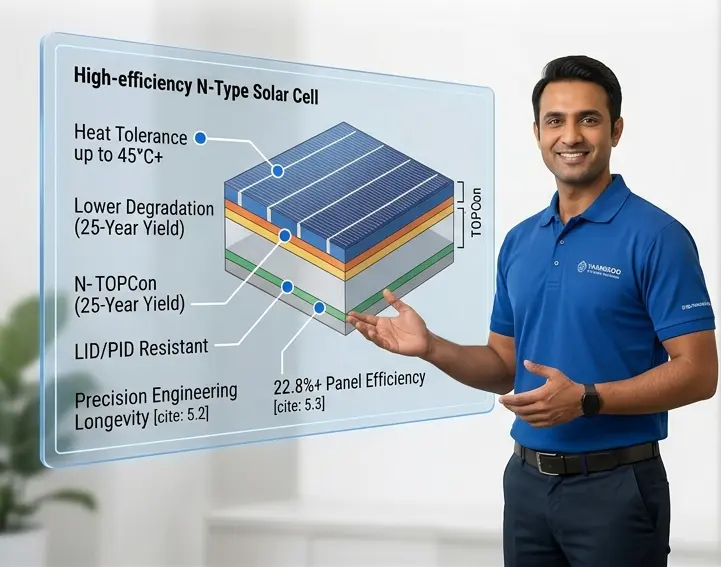
As demonstrated by our technical specialist on the left, the old standard of P-Type PERC technology has been fully phased out in Pakistan’s primary utility and residential sectors. The standard benchmark in 2026 is N-Type TOPCon.
Why N-Type is the Standard for Lahore’s Climate:
Ultra-High Efficiency & Power Density: N-Type TOPCon modules offer efficiencies of 22.8%+ and panel outputs consistently exceeding 600W+ for standard residential models.
Superior Heat Tolerance: P-Type panels traditionally suffer from a large power loss when temperatures exceed 25°C.temperature coefficient. uring you hit your peak generation exactly when your air conditioning loads are highest.
Financial—Optimizing ROI under Net Billing
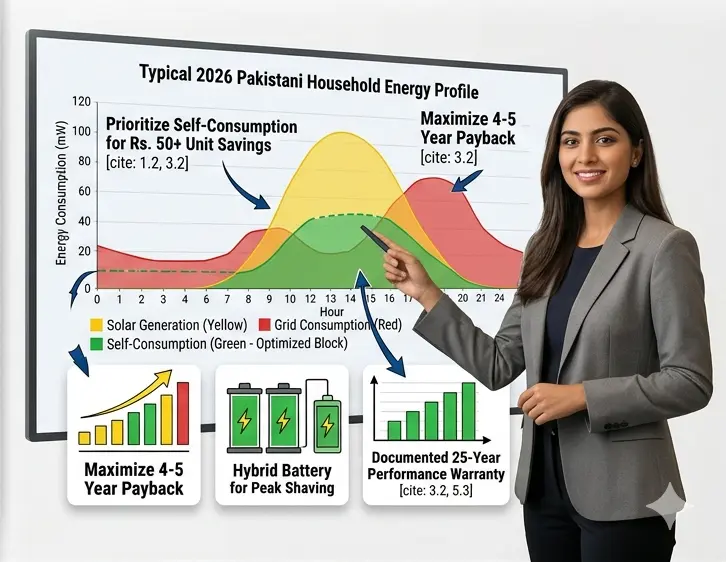
Our financial analysis on the right side of the image visualizes the single most critical concept for 2026 solar ownership: Self-Consumption. Under the new regulations, it is no longer about selling power back to the grid; it’s about dodging the retail electricity price.
The 2026 Financial Strategy: Prioritize Self-Consumption for Rs. 50+ Unit Savings
Under the old net-metering system, users could export excess daytime units and import nighttime units at a 1:1 value. The new Net Billing framework, finalized in February 2026, shifts this dynamic. You now sell excess daytime units at a wholesale rate of ~Rs. 11–13, but you continue to buy nighttime units at the full retail rate of Rs. 45–60+.
National Price Variation & Logistics
Regional price adjustments based on secure transport, insurance, and handling from our central distribution hub.
Primary Distribution Hubs
National Base Rate
(Rs. 40.00 – 44.50)
This benchmark represents the entry-point market price where the highest volume of Tier-1 inventory is held. Due to high competition and zero inland transit costs, these hubs offer the “base” per-watt value used for all national solar financial modeling.
Central & Northern Interior
Base
+ Rs. 0.25 – 0.50 per Watt
Prices in the interior regions typically see a slight upward adjustment. This is attributed to the “Inland Freight Factor”—the cost of specialized, insured transport of fragile N-Type glass from primary ports to regional warehouses.
Southern & High-Logistics
Base
+ Rs. 0.75 – 1.00 per Watt
In remote zones, the “Supply Chain Premium” is highest. Limited local inventory and the requirement for specialized long-haul handling of Bifacial modules often result in a higher per-watt market price compared to the central distribution hubs.
Factors Influencing Regional Price Variance
As an information-first index, we track the three primary economic drivers that cause solar prices to fluctuate across Pakistan
The Fragility Tax (Insurance & Handling)
Solar panels are not standard cargo. The 2026 standard for N-Type Double-Glass panels requires specialized palletization to prevent micro-cracks—invisible fractures in the silicon cells caused by road vibration. The cost of this specialized handling is the primary driver of the “Base +” price seen in remote regions.
Inventory Liquidity
Primary hubs have higher “liquidity,” meaning there are more sellers competing for buyers. In smaller cities, lower stock levels allow local vendors to maintain higher margins, which we reflect in our +Rs. 0.75 per watt estimates.
Local Engineering Compliance
In some northern regions, mounting and hardware requirements must be “Wind-Rated” for higher speeds, which can subtly influence the “package price” of solar hardware in those local markets.